
More Than 40 Years of Supporting Potential: The IBP Journey
For more than 40 years, IBP has been built on a simple yet powerful belief: every individual deserves the opportunity to learn, grow, participate, and reach their potential.
It started in 1986 as a project for children who found the mainstream school environment challenging. Since then, it has grown into a multidisciplinary institution providing education, psychology, therapy, remedial support, and corporate services to children, families, adults, schools, and organizations.
This journey represents something much bigger than the growth of an institution.
It reflects a changing understanding of what meaningful support should look like.
Supporting someone is not simply about addressing one issue. It is about understanding and supporting the whole person.
Looking Beyond a Diagnosis
A diagnosis, learning difficulty, developmental delay, or behavioral concern may explain some of a person's needs, but it does not define who they are.
A child is not simply a child with a learning difficulty. They are a child with interests, abilities, emotions, dreams, and potential.
Young people with developmental challenges can learn meaningful life skills, form relationships, build confidence, and contribute to society.
Similarly, adults experiencing emotional or psychological difficulties can continue to have tremendous professional and personal potential.
This is where holistic development becomes important.
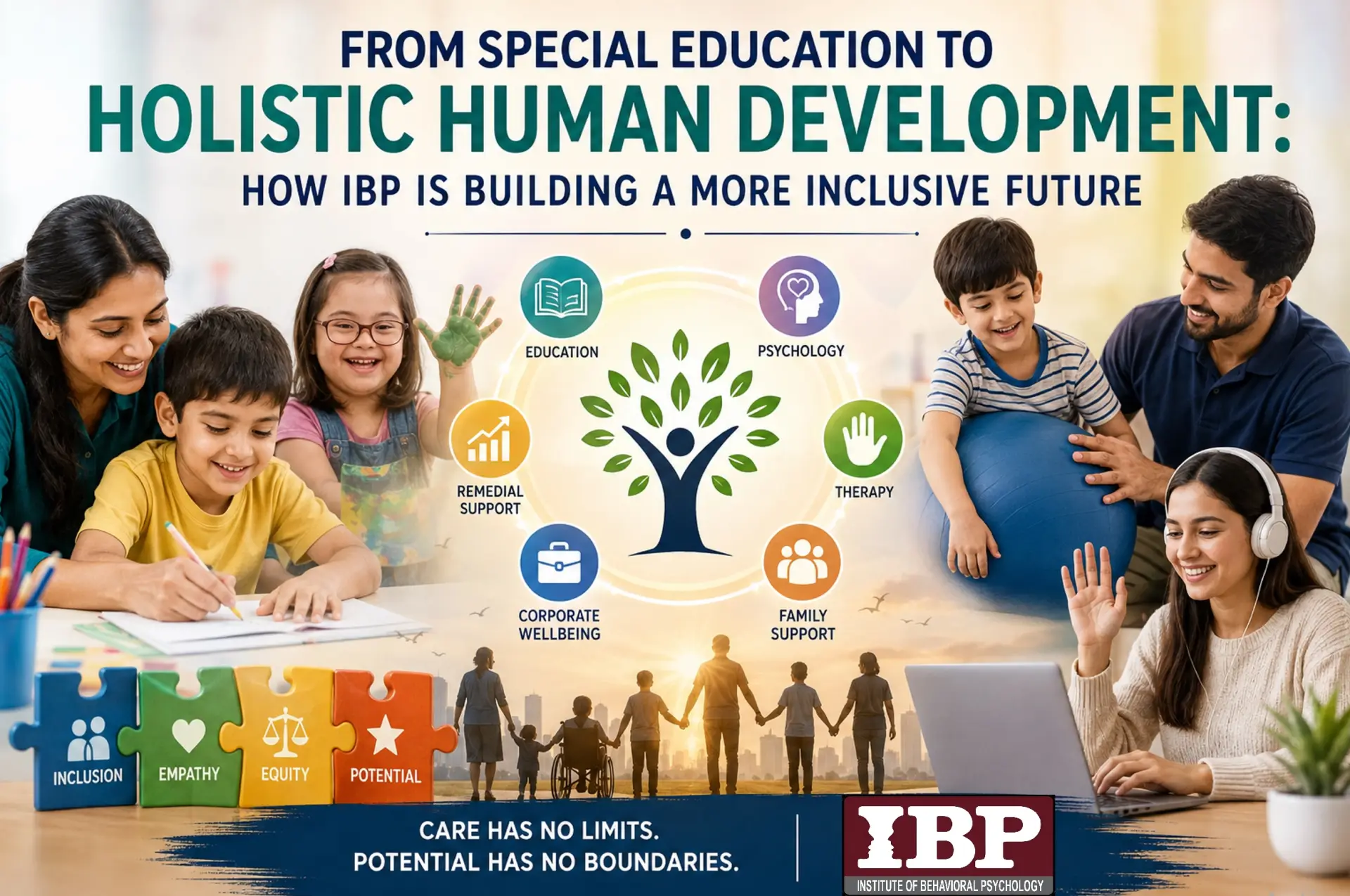
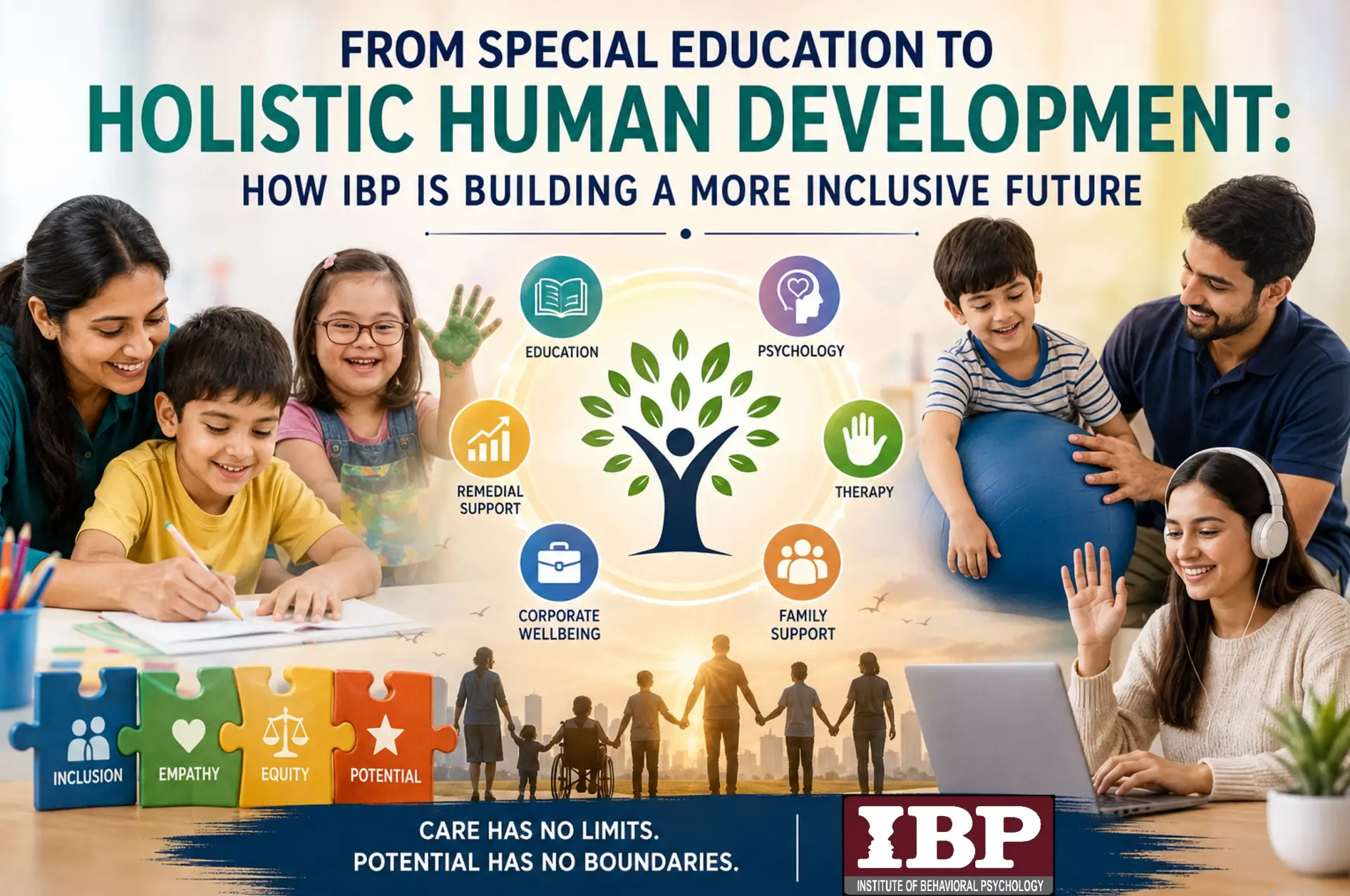
IBP brings together education, psychology, therapy, and developmental support to address an individual's different needs rather than treating each challenge separately.
Education Must Adapt to the Learner
Traditional education can sometimes require children to fit into a fixed system.
But what happens when a child learns differently?
Some children need more time to process information. Others may benefit from different teaching methods, additional repetition, sensory support, behavioral strategies, or one-on-one attention.
A child who does not perform well in a mainstream classroom should not automatically be considered a child who cannot learn.
Sometimes, the environment simply needs to change.
This is the principle behind IBP's School for Slow Learners, which supports children who may not fit into conventional special-needs categories but still experience difficulties coping with mainstream education.
This philosophy is important because inclusion is not about lowering expectations.
It is about creating the right conditions for children to reach their potential.
A Multidisciplinary Approach Provides More Support
Human development does not happen in isolated compartments.
A child's communication can affect learning. Confidence can be influenced by learning difficulties. Behavior can be affected by emotional challenges. Sensory issues may interfere with classroom participation. Family circumstances can also play an important role in overall wellbeing.
When these areas overlap, families may need more than one type of support.
This is where a multidisciplinary approach can be especially valuable.
Within its wider organization, IBP provides educational, psychological, remedial, therapeutic, and counseling services.
The benefit is not simply convenience.
It is coordination.
When professionals understand the bigger picture of an individual's development, support can be better matched to their real needs.
Supporting Families, Not Just Individuals
For every child receiving support, there is often a family facing questions, decisions, expectations, and uncertainty.
Parents may wonder:
- Why is my child struggling?
- Why is my child not making the progress I expected?
- Should I be concerned about school?
- Is this behavior temporary?
- When should I seek professional guidance?
Families need more than a service.
They need to feel understood and supported.
A supportive institution takes parents' questions seriously, approaches assessments professionally, and considers different forms of intervention based on the individual's needs.
This family-centered perspective is an important part of creating sustainable progress.
Inclusion Needs to Extend Beyond the Classroom
Real inclusion does not end when a child leaves school.
The broader goal should be to help people develop the skills they need to participate as independently and meaningfully as possible in family life, education, employment, and society.
This is especially important for children and young people with developmental and learning difficulties.
IBP's School for Differently-Abled Children supports academic, psychological, vocational, and therapeutic development.
That represents a much broader definition of education.
It is education for life.
Human Development Does Not Stop in Childhood
One of the significant developments in IBP's journey is that its work is no longer focused only on children.
The organization now serves children, adolescents, adults, families, schools, and organizations.
Its therapeutic services include outpatient support and online counseling, while its corporate services focus on areas such as employee wellbeing, counseling, stress management, workforce training, and workplace wellness.
This reflects an important principle:
At different stages of life, people need different forms of support.
- A child may require educational and developmental intervention.
- A teenager may need support with an emotional or behavioral concern.
- An adult may benefit from counseling or psychological services.
- An organization may need assistance in creating a healthier and more supportive workplace.
Needs change, but the underlying goal remains the same: helping people function, grow, participate, and perform at their best.
Services for Knowledge Development
An organization dedicated to human development must continue developing its own knowledge and expertise.
This is a direction that IBP's work increasingly reflects through professional development, collaborations, and initiatives focused on neurodiversity and inclusive education.
For example, IBP has partnered with the Aga Khan University Institute for Educational Development to develop a neurodiversity certification program designed to provide educators and caregivers with practical knowledge for supporting neurodiverse learners.
This type of work is important because meaningful inclusion requires more than good intentions.
Teachers need knowledge.
Parents need guidance.
Professionals need training.
Institutions need better systems.
And society needs greater awareness and understanding.
Four Decades of Growth, One Mission Still Going
IBP's story is ultimately not just about the growth of an organization.
It is about growing with a vision.
IBP started with a small effort to support children who were having difficulty succeeding in mainstream education. It has since grown into a multidisciplinary organization offering psychological, educational, therapeutic, remedial, and human-development services.
Its current approach brings together education, therapy, psychology, remedial intervention, family support, and organizational wellbeing within a broader philosophy of holistic development.
It is not simply about the number of departments or services.
It is about the possibilities created through that support.
- A child learning to communicate.
- A student growing in confidence.
- A family learning how to support their child.
- A young person developing vocational skills.
- An adult receiving the support they need.
- An employee achieving a healthier balance.
- A learning organization investing in its people.
These moments are what give meaning to the institution's work.
Designing a Future Powered by Potential
The future of education and human development requires us to move beyond labels, limitations, and narrow definitions of success.
It requires environments that understand differences rather than simply trying to accommodate them.
This means schools that understand different learning styles, employers that care about employee health and wellbeing, families that have access to professional guidance, and organizations that can bring together expertise from different fields.
IBP has continued moving in this direction for more than 40 years.
Its philosophy can be condensed into a simple idea:
Care must have no limits, and every person should have the opportunity to discover their potential.
This is what makes holistic human development more than a service model.
It is a commitment to people.
When education, psychology, therapy, family support, and professional expertise are combined with that purpose, the result is not simply better intervention.
It creates a stronger foundation for a more inclusive society.