What Happens During a Psychological Assessment?
What Happens During a Psychological Assessment?
A psychological assessment is a structured process that helps professionals better understand a child’s or adult’s learning, behaviour, emotions, thinking skills, and overall functioning. For parents, the idea of an assessment can sometimes feel overwhelming, especially when they are unsure what will happen during the appointment. Understanding the process can make it easier to prepare and know what to expect.
At IBP International’s Psychological Services, assessments may help identify areas of strength and difficulty and provide useful information for planning appropriate support and interventions.
Why Is a Psychological Assessment Conducted?
A psychological assessment may be recommended when a child is experiencing ongoing difficulties at school, home, or in social situations. Parents or teachers may notice challenges with attention, learning, memory, emotional regulation, communication, or behaviour.
An assessment may help professionals explore questions such as:
- Why is a child struggling academically despite trying hard?
- Are attention or concentration difficulties affecting learning?
- Does the child have specific learning needs?
- Are emotional or behavioural concerns affecting everyday functioning?
- What are the child’s cognitive strengths and areas that need support?
- What types of educational or therapeutic interventions may be helpful?
Psychological assessments are not simply about identifying problems. They can also highlight a person’s abilities and provide a clearer picture of how they learn and function.
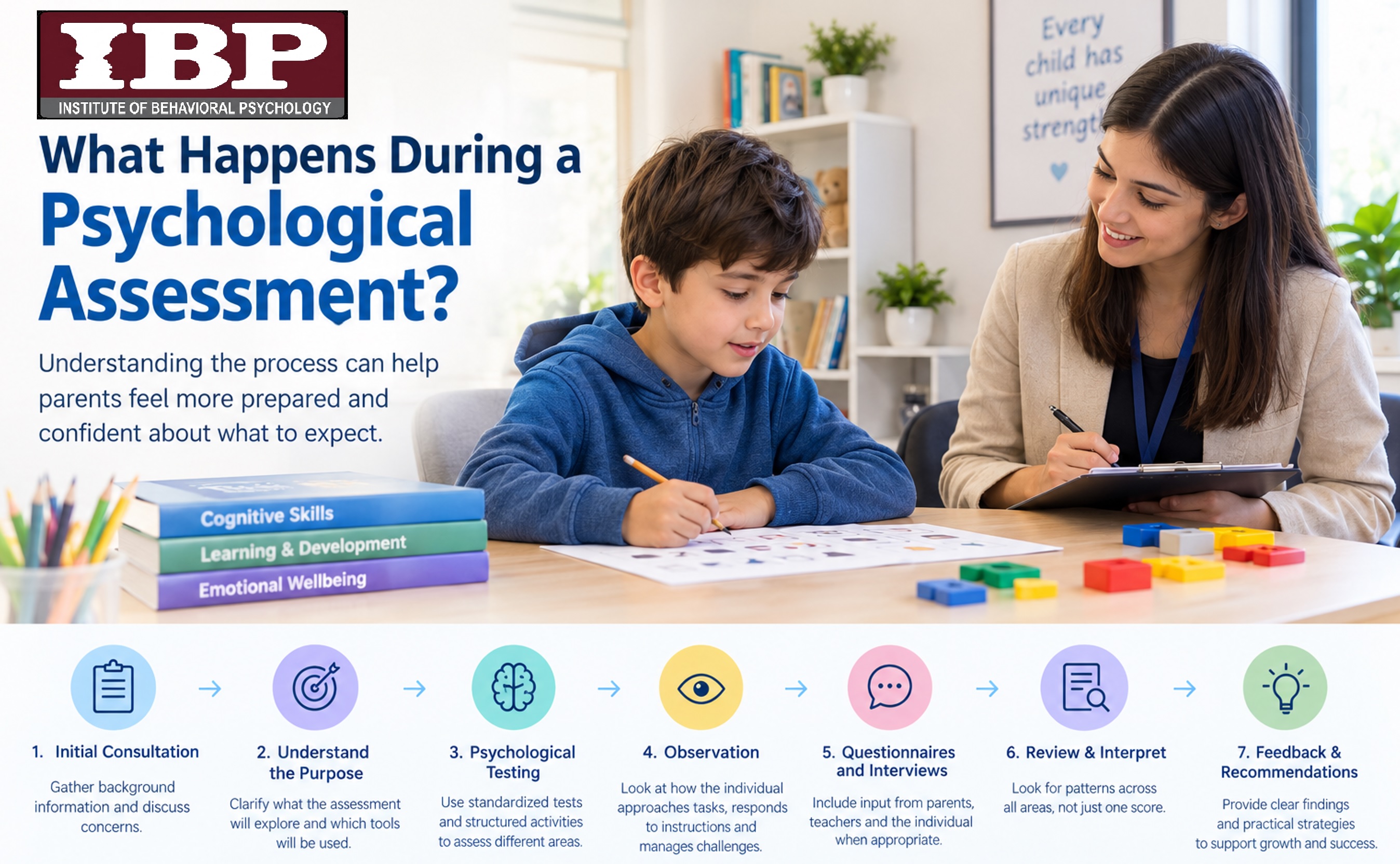
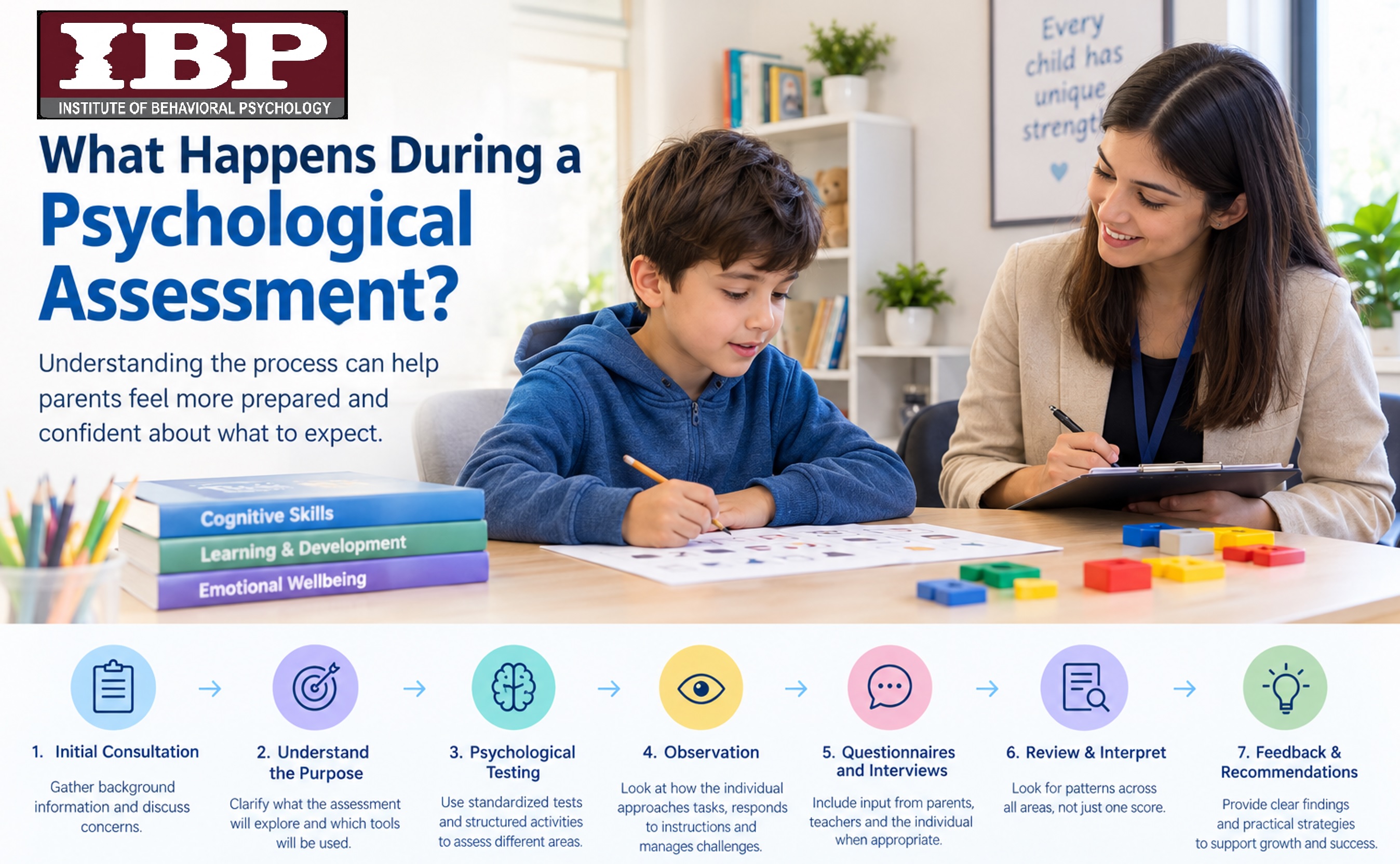
1. Initial Consultation and Background Information
The assessment process usually begins by gathering information about the individual’s background and current concerns.
For children, parents may be asked about developmental history, educational experiences, medical history, family background, behaviour, communication, and social development. Information from teachers or other professionals may also be helpful, depending on the reason for the assessment.
This stage helps the psychologist understand the concerns in context rather than relying only on test results.
Parents should feel comfortable sharing relevant information, including when difficulties first appeared, situations in which they occur, and strategies that have already been tried.
2. Understanding the Reason for the Assessment
Before testing begins, the psychologist typically discusses the main concerns and clarifies what the assessment is intended to explore.
Different assessments have different purposes. For example, an evaluation may focus on cognitive abilities, academic skills, attention, memory, emotional functioning, behaviour, or a combination of these areas.
Understanding the purpose of the assessment helps determine which assessment tools and methods are appropriate for the individual.
3. Psychological Testing
One of the most important parts of a psychological assessment is the use of standardized tests and other structured activities.
Depending on the referral question, an assessment may include tasks designed to examine areas such as:
- Reasoning and problem-solving
- Memory
- Attention and concentration
- Processing skills
- Language-related abilities
- Academic achievement
- Emotional functioning
- Behaviour and social functioning
The specific tests used depend on the person’s age, needs, developmental history, and reason for referral. IBP International provides a range of standardized psychological and psychometric assessments through its Psychological Services.
For children, these activities may feel more like puzzles, questions, games, or school-related tasks rather than a traditional exam.
4. Observation During the Assessment
Testing is only one part of the assessment process. The psychologist may also observe how the individual approaches different tasks.
For example, they may pay attention to how a child responds to instructions, approaches challenging activities, maintains attention, communicates, asks for help, or manages frustration.
These observations can provide useful information that may not be captured by a test score alone.
It is important to remember that a psychological assessment is not designed to judge a child or determine whether they are “good” or “bad” at something. The goal is to understand their individual pattern of strengths and challenges.
5. Questionnaires and Interviews
Parents, teachers, or the individual being assessed may sometimes be asked to complete questionnaires or participate in interviews.
These questionnaires can provide information about behaviour, attention, emotional experiences, social functioning, or everyday skills across different environments.
For children, parent and teacher observations can be particularly valuable because a child’s behaviour may differ between home and school.
The psychologist considers this information alongside testing results, interviews, observations, and developmental history.
6. Reviewing and Interpreting the Results
After the assessment activities are completed, the psychologist reviews the information collected.
The results are not generally interpreted based on one score alone. Instead, the psychologist considers patterns across different areas and relates the findings to the original concerns.
For example, a child may demonstrate strong verbal reasoning while experiencing greater difficulty with working memory or processing speed. Understanding these patterns can help explain why certain classroom tasks may be easier or more challenging for that child.
A comprehensive assessment can therefore provide a broader picture of how an individual thinks, learns, behaves, and responds to different situations.
7. Feedback and Recommendations
A psychological assessment should ultimately provide information that can be used to support the individual.
During the feedback stage, the psychologist may explain the findings, discuss areas of strength and difficulty, and provide recommendations.
Depending on the assessment, recommendations may relate to:
- Classroom strategies
- Learning support
- Behavioural interventions
- Therapy
- Parenting strategies
- Educational accommodations
- Further assessment or specialist referral
The recommendations should be practical and connected to the individual’s specific needs. In some cases, psychological assessment may be considered alongside remedial services or therapeutic services to provide more comprehensive support.
How Can Parents Prepare Their Child?
Parents can help by explaining the assessment in simple, positive language. Children generally do not need to feel that they are preparing for an exam.
You might explain that they will meet a professional who wants to learn more about how they think, learn, and solve different activities.
It can also help to ensure the child gets enough rest and arrives with a calm mindset. Most importantly, parents should reassure children that they do not need to get every answer correct.
Parents can also bring relevant school reports, previous assessment results, or other information that may help the psychologist understand the child’s development and current concerns.
Understanding Your Child Through Assessment
A psychological assessment is more than a collection of test scores. It is a structured way of understanding an individual’s cognitive, academic, emotional, behavioural, and developmental profile.
For parents, the results can provide valuable insight into why a child may be experiencing difficulties and what types of support may help them move forward.
IBP International provides psychological, educational, remedial, and therapeutic services designed to support children, families, adolescents, and adults. Its multidisciplinary approach can help families explore different areas of need and identify appropriate support.
IBP’s School for Slow Learners & Special Children also supports children and youth with educational and developmental needs through academic, psychological, vocational, and therapeutic support.
When Should You Consider a Psychological Assessment?
If you have ongoing concerns about your child’s learning, behaviour, attention, emotional wellbeing, development, or academic progress, speaking with a qualified professional can be an important first step.
A psychological assessment can help provide a clearer understanding of a child’s strengths and challenges rather than relying on assumptions about why they may be struggling.
Every individual is different, so the type and scope of an assessment should be determined according to the person’s concerns and needs. IBP International’s psychological services include standardized intelligence, achievement, behavioural, emotional wellbeing, and diagnostic assessments for children, adolescents, and adults.
To learn more about assessment and support options, you can contact IBP International and discuss your concerns with the team.
Understanding a child is often the first step toward providing the right support.